

Two square diamonds, two completely different personalities. That's really what's going on with cushion and princess cut: same basic footprint, opposite finish. Cushion cut softens every corner into a rounded, pillow-like edge and lets light scatter across the stone in warm, uneven flashes. Princess cut keeps every corner sharp and pointed, channeling light into tighter, brighter bursts through a more uniform facet grid. One reads as heirloom, the other reads as engineered, and once you see them side by side under the same light, the difference stops being subtle.
The part buyers actually get stuck on, and the part we're covering here, is what these two shapes cost once you move past the diamond itself: how pricing structure actually plays out on a ring versus a pair of cushion cut earrings versus a princess cut diamond pendant, what drives the number up or down, and what to check before you commit either shape to a piece you're buying, gifting, or stocking.
What Is a Cushion Cut Diamond?
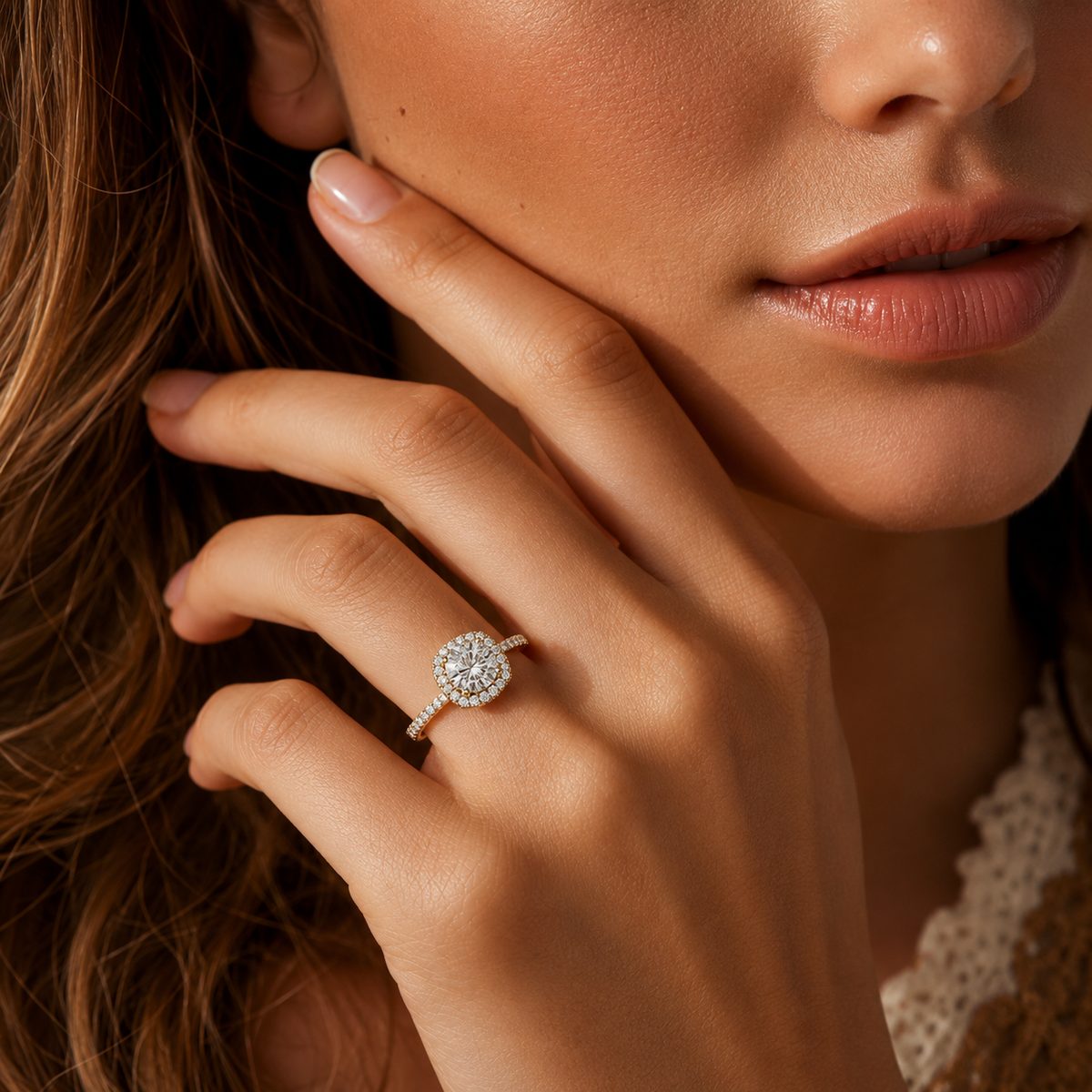
The cushion cut traces back to the old mine cut of the 1700s, which explains its softer, pillow-like outline. Modern cushion cuts keep that rounded-corner silhouette but use updated faceting to bring out more brightness than their antique ancestors ever managed. Two sub-styles dominate the current market:
-
Chunky/crushed-ice cushions: They feature larger facets, with a mix of broad flashes and finer sparkle.
-
Elongated cushions: They offer a rectangular stretch that visually lengthens the finger and are popular in halo settings.
Because the corners are rounded rather than pointed, cushion cuts lose slightly less rough diamond during cutting than a strict square shape would, and the shape is naturally more forgiving of small inclusions near the edges. You can browse the full range in our cushion cut diamond collection.
What Is a Princess Cut Diamond?
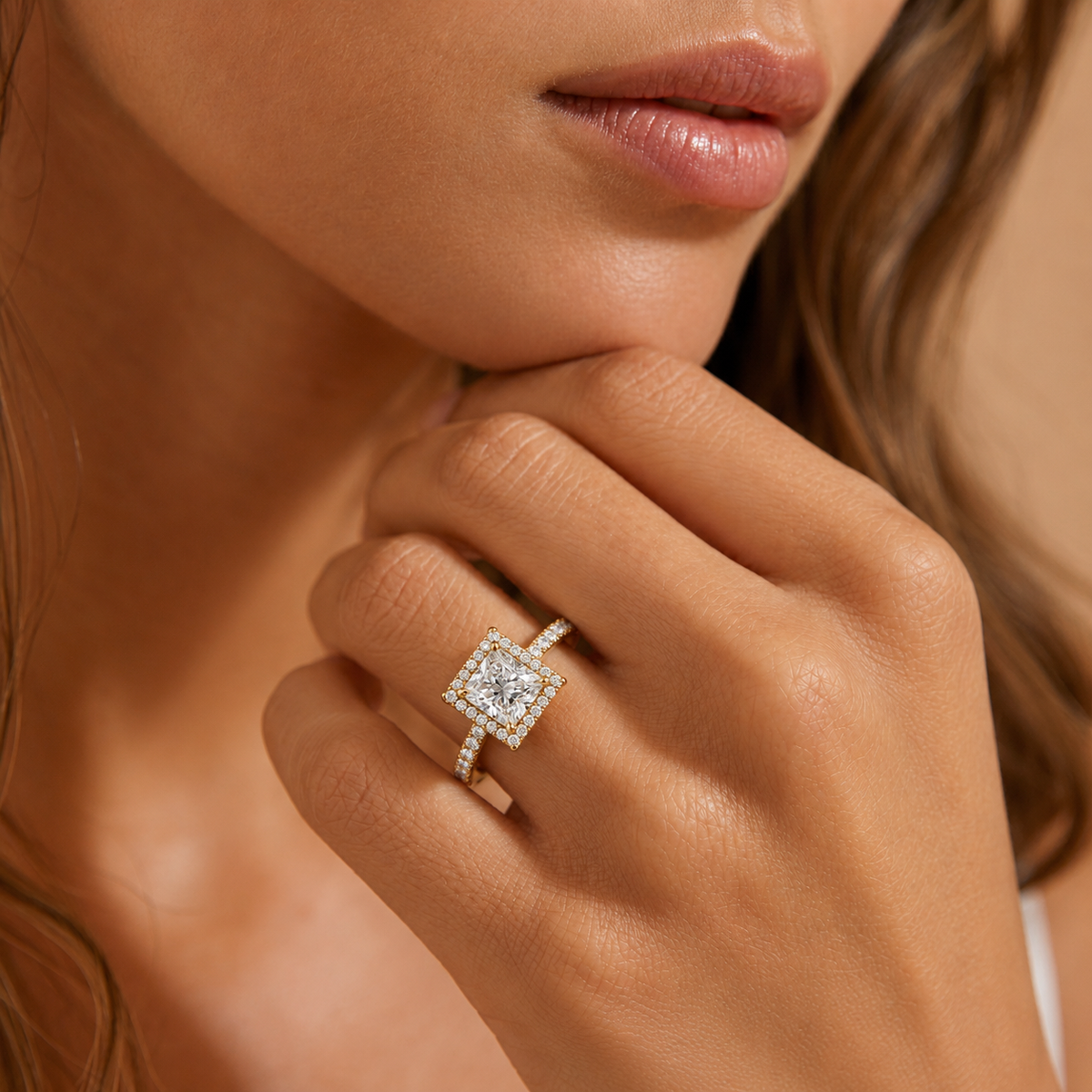
The princess cut is a much newer invention, developed in the 1960s- 70s to combine round-brilliant-level sparkle with a clean square outline. It typically has 57 to 76 facets and an inverted pyramid pavilion, which gives it sharp, concentrated flash rather than the softer scatter of a cushion. Princess is currently the second most popular diamond shape sold in the US, behind round brilliant.
Because it's cut from a nearly square rough shape, the princess cut retains roughly 80% of the original rough stone. It's noticeably more efficient than a round brilliant, which keeps closer to 40%. That efficiency is one reason princess cuts are priced slightly lower per carat than an equivalent round. Explore current styles in our princess cut diamond collection.
Cushion and Princess Diamond Shape and Silhouette: The Real Difference
Both are square-based, but they read completely differently on the hand:
|
Feature |
Cushion Cut |
Princess Cut |
|
Corners |
Rounded, pillow-like |
Sharp, pointed |
|
Outline |
Softer, sometimes rectangular |
Crisp, geometric |
|
Facet Pattern |
Larger, mixed brilliance |
Tighter, uniform brilliance |
|
Overall impression |
Vintage, romantic |
Modern, structured |
If you're comparing either of these against other silhouettes before deciding, it's worth looking across the full range of diamond shapes. Oval and radiant in particular sit stylistically between the two and are worth a side-by-side look before you commit.
Light Performance: Sparkle vs. Fire

This is where most buyers actually make their decision.
-
Princess cut diamonds are engineered for brilliance. The concentrated facet structure throws light back in short, bright bursts. This is why princess is often described as "crisp" or "icy."
-
Cushion cut diamonds trade some of that raw brilliance for fire: the rainbow flashes you get from larger, less uniform facets. This gives a warmer, softer glow that photographs beautifully in warmer metal tones like yellow or rose gold.
Neither is objectively better; it depends on what a customer (or you, shopping for yourself) responds to. A useful in-store test: hold both cuts under the same direct light source. Princess will "flash" more sharply. Cushion will glow more evenly across the surface.
Durability and Setting Considerations
Diamond corners are the weak point on any square shape, and this is where the two diamonds differ most in practical terms:
-
Princess cut corners are true 90-degree points, which are more exposed to chipping during daily wear or knocks. A four-prong or bezel setting that covers the corners is almost always recommended.
-
Cushion cut corners are rounded, distributing stress more evenly across the girdle. This makes cushion one of the more durable fancy shapes for everyday wear, closer to round brilliant in resilience.
For anyone building or reselling an active-wear piece: a tennis bracelet, an everyday band. This durability gap is worth flagging to the customer before the sale, not after a chip claim comes back.
What Drives the Cushion and Princess Cut Diamond Jewelry Costs
Diamond shape is only one input into price, and it's usually not the biggest one. Here's what actually moves the number, followed by how that plays out across the pieces people actually buy in these two cuts.
What sets the base price:
-
Rough retention
Princess retains roughly 80% of the original rough diamond during cutting, versus about 65-70% for cushion. That efficiency is one reason princess sometimes prices a touch lower per carat, around $100 to $200 less than a cushion of comparable size and quality.
-
The 4Cs, same as any diamond
Diamond 4Cs, including cut quality, color, clarity, and carat weight, move the price far more than the shape label does. For example, a well-cut cushion and a well-cut princess at the same grade will land close together.
-
Lab-grown vs. natural
This is the single biggest lever. A certified lab-grown diamond, graded by GIA or IGI exactly like a mined stone, typically runs 30-40% less per carat than natural, which is why it's become the default for buyers who want more size or clarity for the same budget. Our lab-grown vs. natural diamond guide breaks this down in full.
-
Metal and setting
A solitaire in 14K gold costs very differently from a halo or pavé setting in the same shape; accent stones and metal weight add up fast, often more than moving up half a carat on the center stone.
How Does the Cost Translate Across Jewelry Types?

Check what kind of jewelry you can buy with the cushion and princess diamond cut:
-
Engagement rings
Engagement rings carry the widest range, since carat size, halo vs. solitaire, and band detail all stack on top of the center stone. Entry-level cushion and princess solitaires typically start in our under $1,000 collection, with halo and three-stone designs moving into the $1,000-$2,500 range as carat weight and accent diamonds increase.
-
Earrings (studs and drops)
Diamond stud earrings and hoop designs are priced mostly off total carat weight across the pair, so a matched set of small cushion or princess studs sits well below a single equivalent-size ring. This is often the lowest-cost entry point into either cut.
-
Pendants and necklaces
Pendant and necklace jewelry land in between, where a single cushion or princess stone on a simple bail costs close to the loose-diamond price plus modest metalwork. Halo pendant styles add 15-25% for the accent stones and setting labor.
-
Bracelets
Diamond bracelets, especially tennis-style pieces using multiple smaller cushion or princess stones, price cumulatively rather than per stone, which is why total carat weight. It's not individual stone size; it's the number to compare across two bracelet listings.
For pieces above the $2,500 mark- larger center stones, fully paved bands- it's worth speaking directly with a jeweler rather than comparing sticker prices alone. You can browse that tier in our premium collection or reach out through Luxara Jewels' contact page for a custom quote.
From the Sourcing Side: What Jewelry Buyers Actually Notice
If you're sourcing across multiple pieces for a boutique, a custom program, or repeat personal purchases, a few things become obvious that don't show up in a typical "which is prettier" jewelry purchase:
-
Certification consistency matters more on cushion.
Because cushion facet patterns vary so much between "chunky" and "crushed ice" styles, two stones with identical GIA or IGI grading can look noticeably different in person. Always request the cut photo or video, not just the certificate, before committing to a cushion stone sight-unseen.
-
The princess cut is the easiest shape to photograph and list consistently.
Its uniform facet structure means product photos match the in-hand appearance more reliably, which matters if the piece is sold online rather than tried on in-store.
-
Setting choice affects long-term satisfaction more than cut choice does.
The single biggest source of post-purchase complaints on square stones isn't the shape. It's an unprotected corner on a prong setting. A halo or bezel resolves this on both cuts and is worth specifying at the design stage, not after.
-
Elongated cushions are currently outperforming classic square cushions in demand.
This is largely because they read larger per carat on the finger, a detail worth knowing if you're deciding what to stock or recommend.
If you're building a custom piece around a cut for yourself, our jewelry customization service works directly from your shape, carat, and setting preferences, and our team can walk through certification and sourcing questions for orders via our contact page.
Which One Should You Choose?
-
Choose cushion if you want vintage warmth, a softer glow, and better everyday durability.
-
Choose princess if you want sharp modern lines, maximum brilliance, and slightly better value per carat.
Both hold up well in halo, three-stone, and solitaire settings, and both are widely available as certified lab-grown stones. So, the decision really does come down to which sparkle you'd rather look at every day.
FAQs
-
Does cushion cut or princess cut look bigger for the same carat weight?
Princess cut generally appears slightly larger face-up because its pointed corners extend the visible surface area, while cushion cut's rounded corners lose a bit of that spread. However, an elongated cushion narrows this gap considerably.
-
Which cut is more expensive, cushion or princess?
They're usually close, with princess sometimes priced a touch lower per carat because it retains more rough during cutting. But clarity, color, and lab-grown vs. natural origin affect price far more than the shape choice itself.
-
Can a cushion cut and princess cut be paired together in the same piece?
Yes. The two are commonly combined in three-stone rings or halo designs, with a princess or cushion center flanked by the other shape as side stones, since both share the same square base geometry.
-
Is princess cut going out of style?
Princess cut remains the second most popular diamond shape in the US after round brilliant, though cushion, especially the elongated style, has gained ground significantly over the past several years.
-
How much should I expect to pay for a cushion- or princess-cut ring?
A lab-grown solitaire in either shape typically starts under $1,000 for a smaller carat weight, moving into the $1,000-$2,500 range with a halo or added accent stones, and above $2,500 for larger center stones or fully paved bands. Natural diamonds run higher across every tier.
-
Why do two rings with the same carat weight cost so much more?
Cut quality, color, and clarity grade the diamond itself, while metal type, band design, and accent stones account for the rest. Carat weight is one of four factors, not the only one.
-
What is the rarest diamond shape?
Marquise and pear shapes are generally considered rarer in the current market than either cushion or princess, since demand and cutting yield make square and round shapes more commonly produced.
-
Does diamond shape affect resale value?
Round brilliant retains resale value best due to consistent global demand; cushion and princess both hold value reasonably well but typically sell below original retail, as is standard for nearly all diamond shapes.
-
How do I know if a cushion cut diamond has good sparkle?
Request the certificate's light performance notes and, ideally, an ASET or ideal-scope image; cushion cuts vary more in cut quality between vendors than more standardized shapes like round or princess.
-
Is a lab-grown cushion or princess cut diamond worth it?
Lab-grown diamonds in either shape carry the same GIA/IGI grading standards as natural stones, at a lower price point per carat, making them a common choice for buyers who want larger or higher-clarity stones within the same budget.

