

The setting is the part of an engagement ring that does the most work and gets the least credit. It holds the diamond in place through thousands of hours of typing, dishwashing, gym sessions, and handshakes, and it shapes how much light reaches the stone. Two rings with the identical diamond can look and wear completely differently depending on how that stone is held.
Most people choose a setting the same way they choose a cushion or princess diamond shape: by scrolling until something looks right. That works for appearance, but not for durability, comfort, or how the ring holds up against the way you actually live. This guide explains the main ring setting types, then walks through a lifestyle-based framework for narrowing them down.
What Is a Diamond Ring Setting?
A diamond ring setting is the structure that secures the stone to the band. It's worth separating two terms that people use interchangeably, but that mean different things.
A ring setting style refers to the overall design — solitaire, halo, three-stone. A setting technique refers to the physical method used to hold the stone in place — prong, bezel, pavé, channel, tension. A halo ring, for example, might use prongs to hold the center diamond and pavé to set the surrounding accent stones. Understanding this distinction makes it much easier to compare rings, because two "halo" rings can behave very differently depending on the technique used underneath the design.
The setting affects three things beyond looks: how much light reaches the diamond (brilliance), how exposed the stone is to daily knocks (security), and how easy the ring is to clean and inspect (maintenance). Every setting decision is really a trade-off between those three factors.
8 Most Chosen Diamond Ring Settings
According to GIA, these are the most popular ring settings for engagement and wedding rings as well:
-
Solitaire Setting
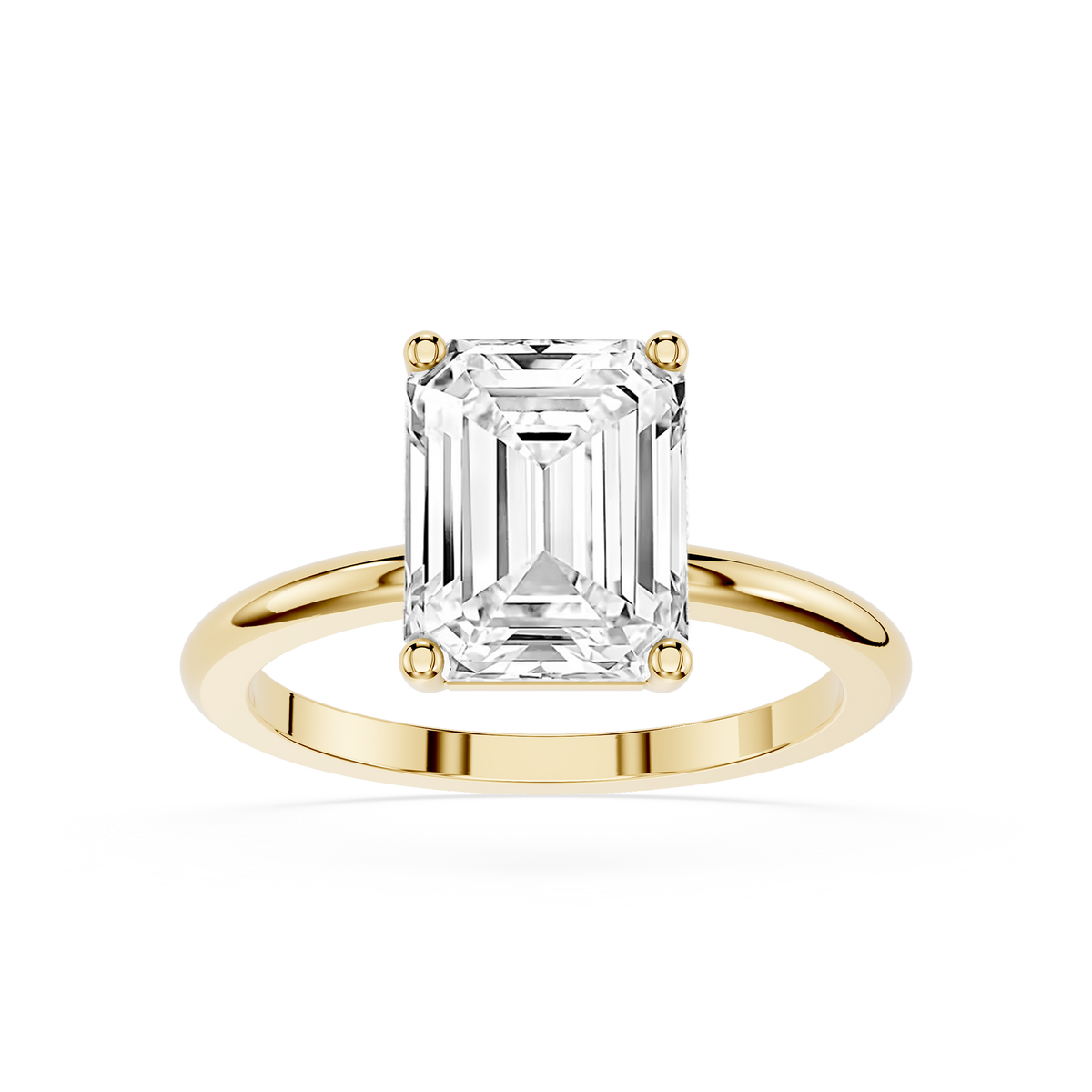
Solitaire diamond engagement rings feature a single stone held by four or six prongs, with no accent stones. It's the most traditional engagement ring style because it puts the diamond, not the metalwork, at the center of attention. So, you can pair a versatile ring with any wedding band.
Fewer prongs (four) expose more of the stone and let in more light, which is why four-prong settings are often chosen for round, oval, and pear diamonds within the range of 1-carat to 3-carat where brilliance is the priority.
Six prongs distribute pressure across more contact points, which generally makes the setting more resistant to damage if one prong is bumped or bent. It is a common recommendation for larger center stones or diamonds with pointed corners, like a 5-carat princess cut or emerald cut.
-
Halo Setting
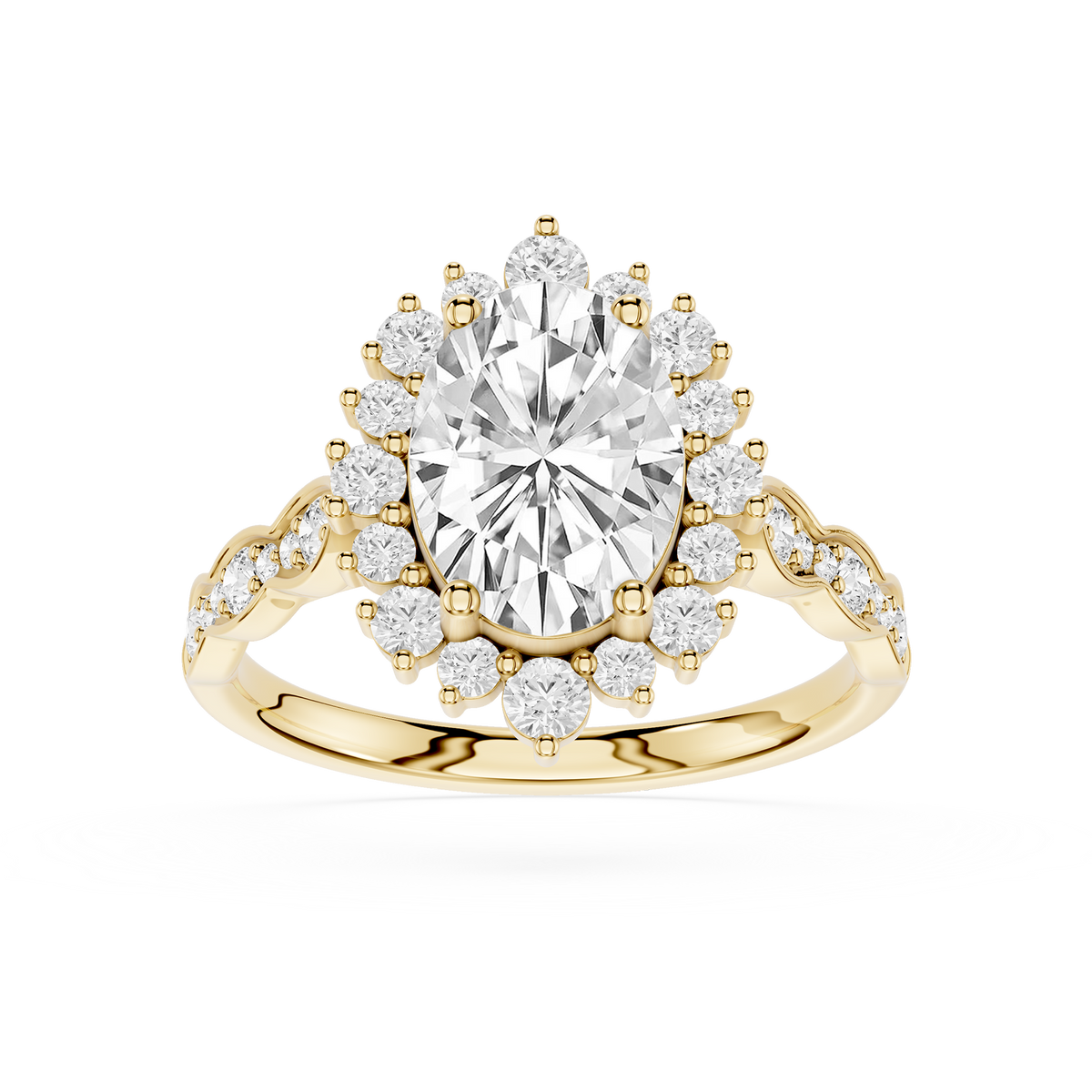
Now, moving towards one of the most talked-about ring settings: "Halo engagement rings." Compared to a solitaire, a halo surrounds the center diamond with a ring of smaller accent stones, usually pavé-set. The visual effect is a larger, more continuous spread of sparkle, and the halo can make a center stone appear noticeably larger than its actual carat weight from a distance.
For example, a 1-carat oval diamond halo engagement ring can look like 2 carats with the accent stones. Adding 14KT gold also enhances the look.
Halo rings also sit a little wider on the finger, which some people love, and others find less comfortable under gloves or tight-fitting rings. A halo is a strong option for anyone who wants maximum visual presence without increasing the size — and cost — of the center diamond itself.
-
Three-Stone Setting
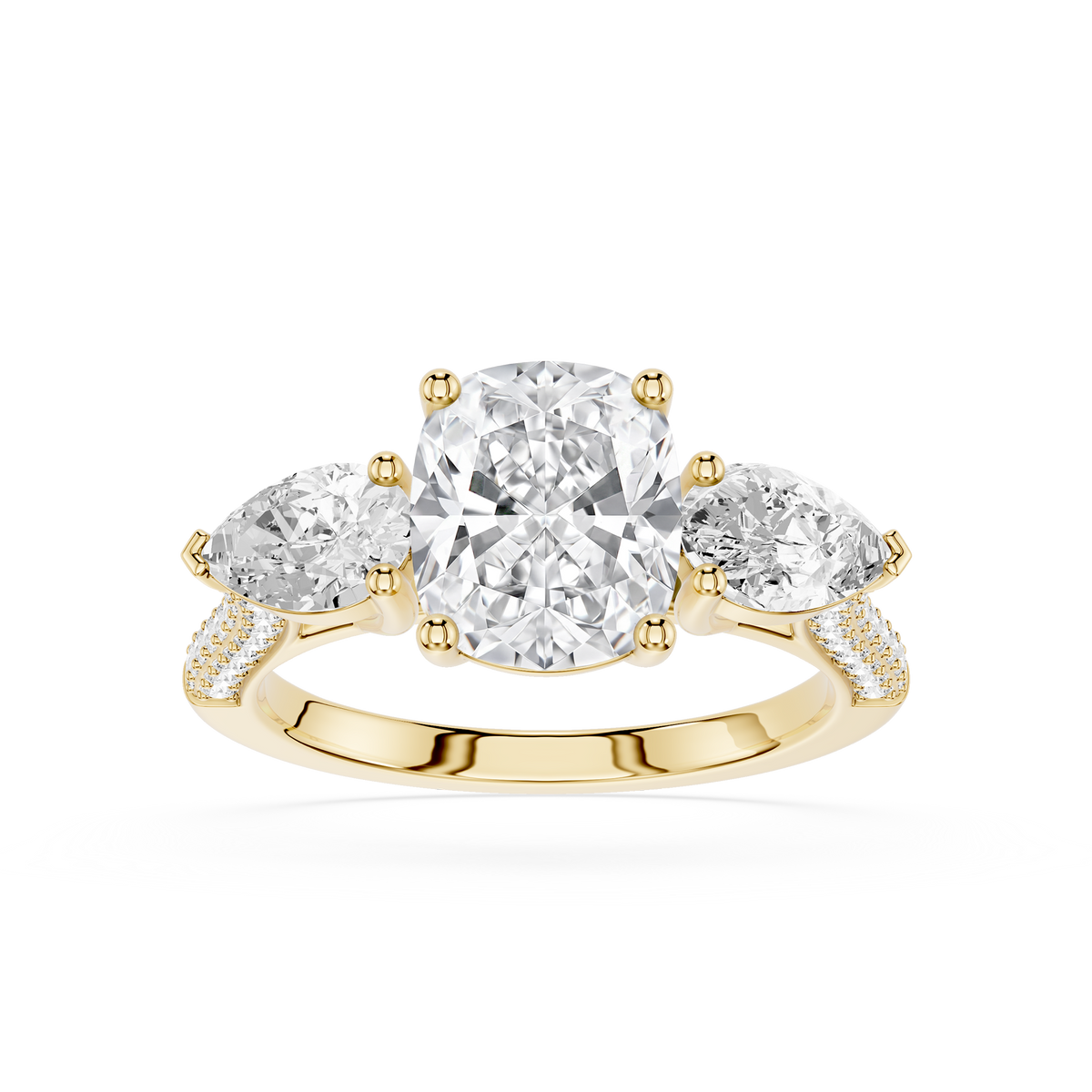
Couples think the ring should represent their entire love journey, and the three-stone ring setting helps them. Here, the center diamond between the two smaller side stones represents the past, present, and future.
When selecting the diamond shape and carat weight for this fancy design ring, choose round or elongated shapes like emerald, radiant, or even cushion. For a brilliant look, princess is the right choice, with round or baguette-cut stones to add width across the whole hand.
Three-stone engagement rings suit people drawn to symmetry and a bit of symbolism, and they photograph particularly well from the side, a detail often overlooked in setting comparisons. They're a good match for buyers who want more presence than a solitaire but a more structured look than a halo.
-
Pavé and Channel Settings
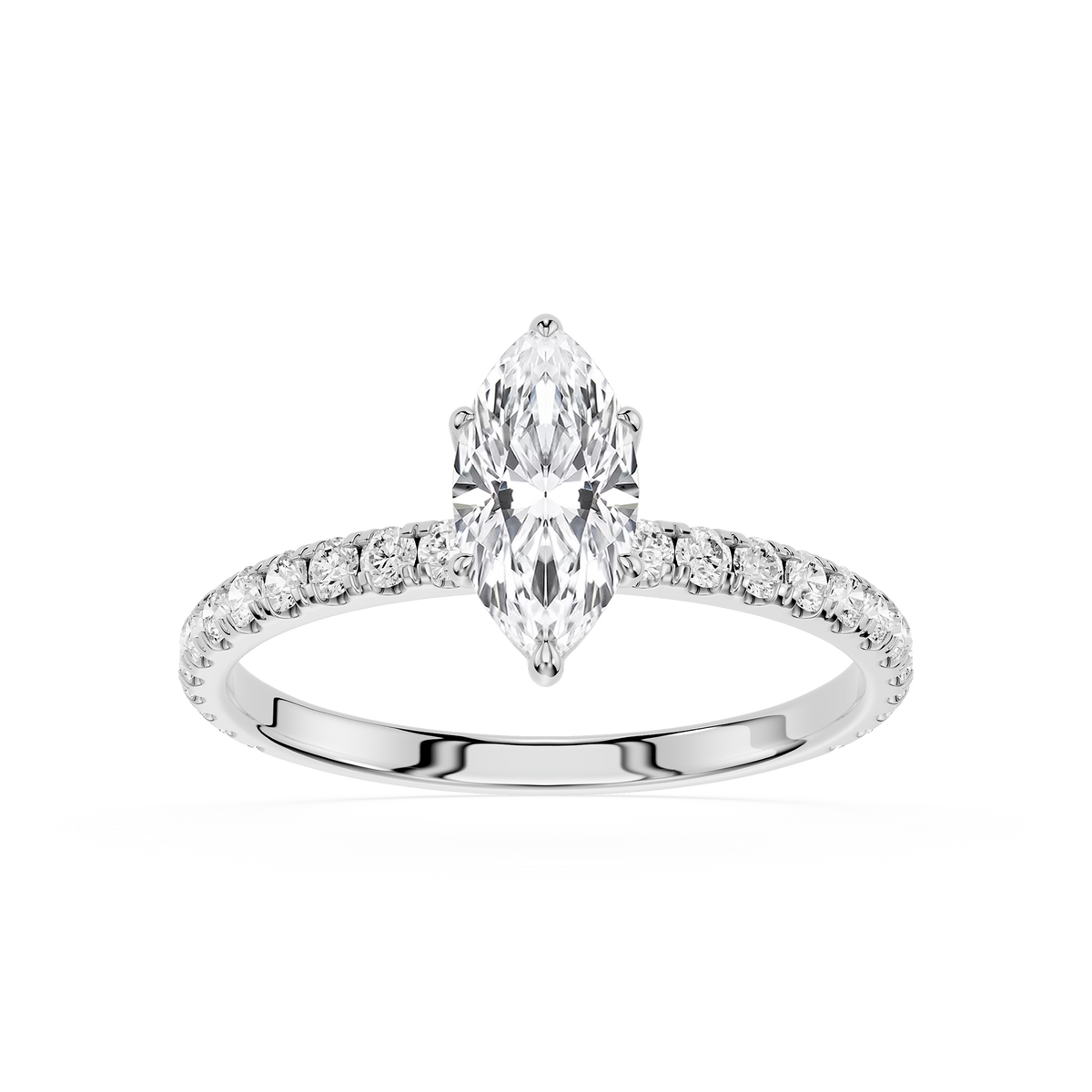
Pavé and channel settings both use small accent diamonds along the band, but they secure those stones differently, which matters more than most buyers realize.
Pavé sets tiny diamonds into individually drilled holes, held by small shared prongs or beads, so the stones sit slightly proud of the band and catch light from multiple angles. It's brilliant, but the small prongs are more delicate and can catch on fine fabrics like wool sweaters or knits over time, and any single stone that loosens needs a jeweler's attention.
Channel setting sets the accent diamonds between two parallel metal rails with no prongs, so the surface is smooth and nothing protrudes. It's a more practical choice for people who wear rings daily and want fewer snag points, though the enclosed stones don't catch quite as much light as pavé.
If you're deciding between the two purely on durability, channel setting is generally the more forgiving option and usually appears in the half-eternity diamond wedding band. If sparkle across the band is the priority, pavé does more of that work, and continuous-diamond styling in this family connects naturally to diamond eternity bands.
-
Bezel Setting
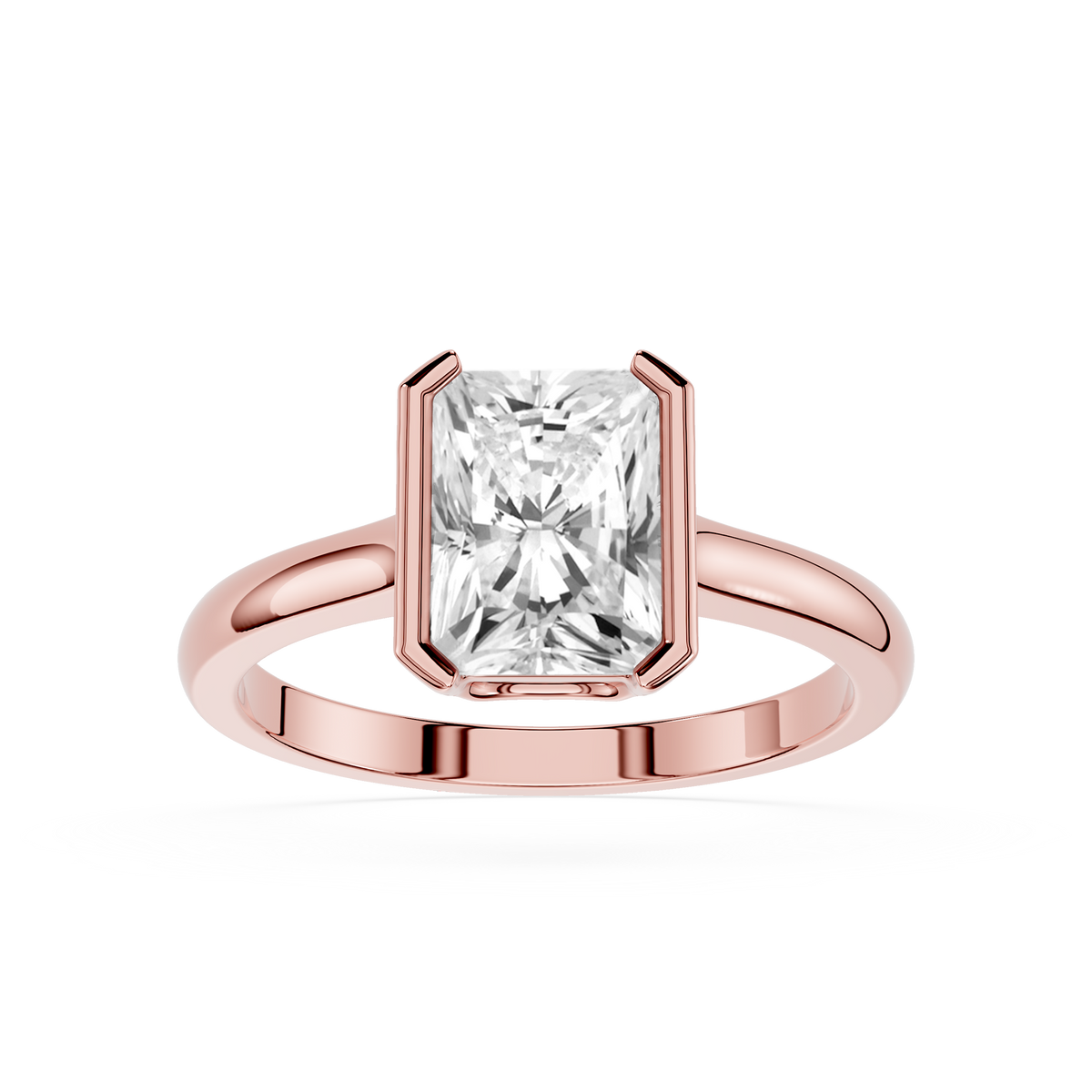
A bezel setting wraps a thin rim of metal fully or partially around the diamond's edge, enclosing the girdle. Because there's no protruding metal or exposed stone edge, it's one of the more snag-resistant and protective techniques available. However, the metal rim reduces the amount of light entering the sides of the stone, which can slightly mute brilliance compared to an open prong setting.
-
Cathedral Setting
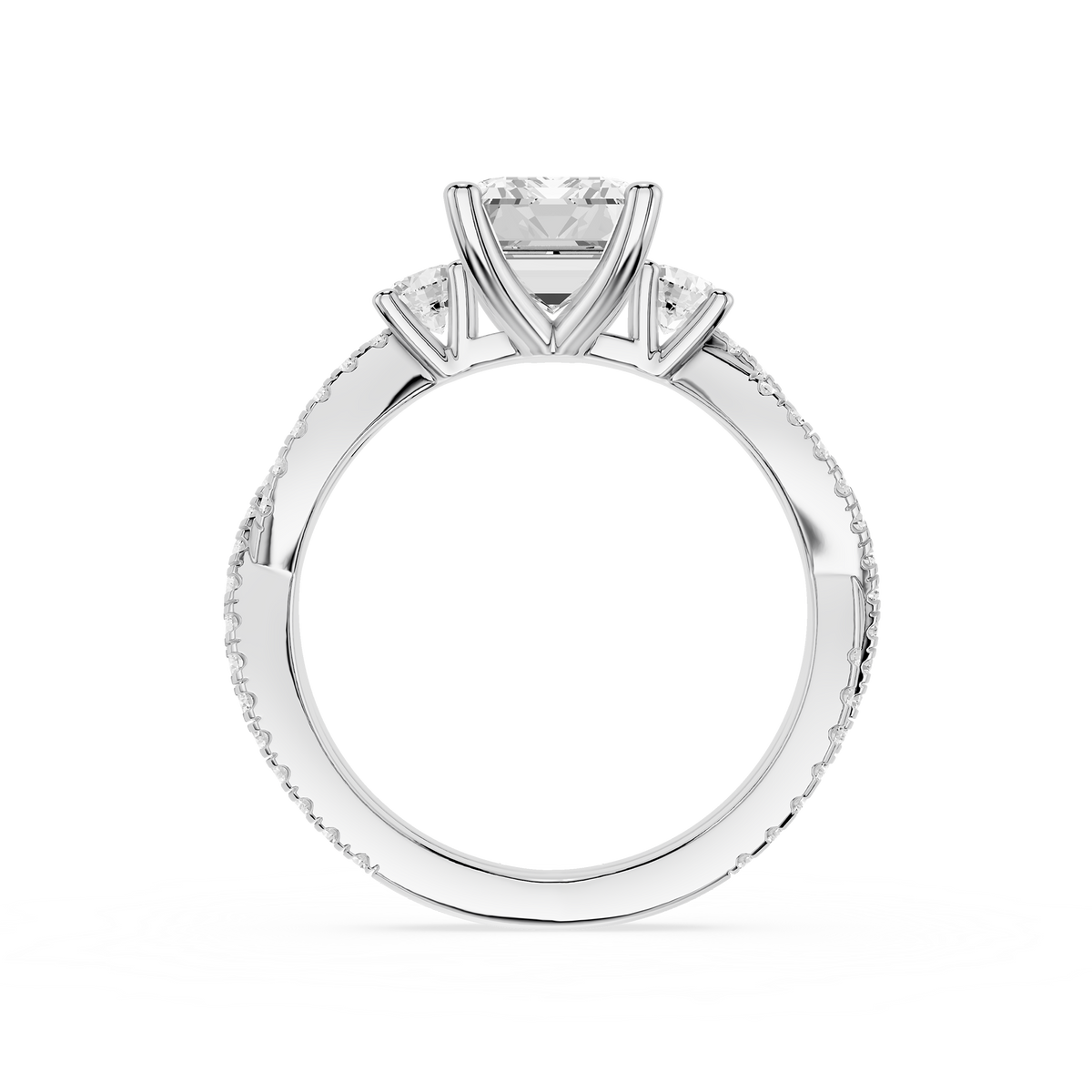
A cathedral setting raises the center stone with arched supports that rise from the band. A 2-carat round cut or cushion diamond appears perfect, adding height and an elegant profile. So, when worn on the finger with the 14KT gold band, it looks more unique than a low-set solitaire.
-
Tension Setting
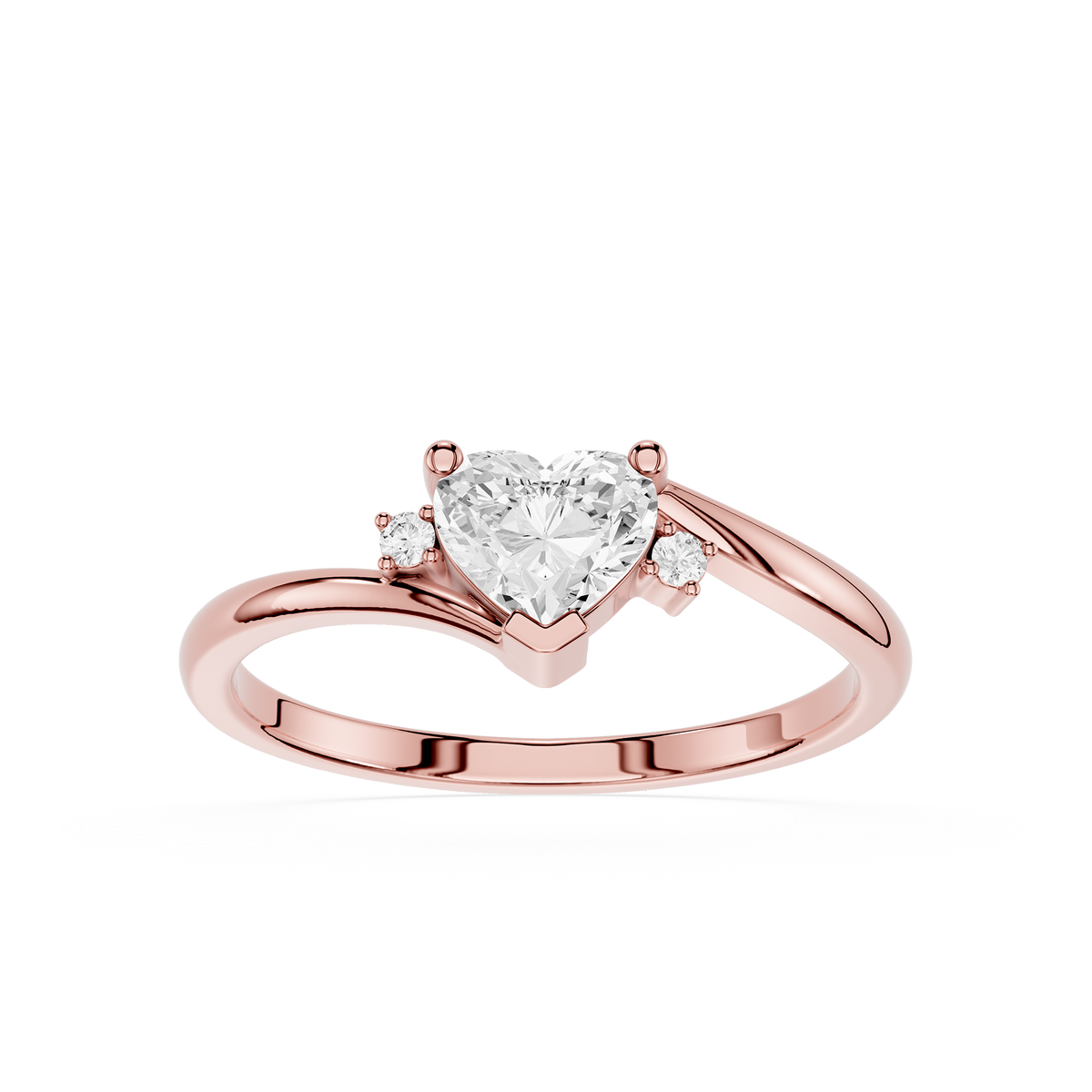
A tension setting holds the diamond with the band's spring pressure, with little or no visible metal touching the stone, giving the illusion that it's floating. It's a striking, modern look, but because the fit is custom-calibrated to the exact stone, resizing later is more involved and usually requires a specialist.
-
Flush Setting
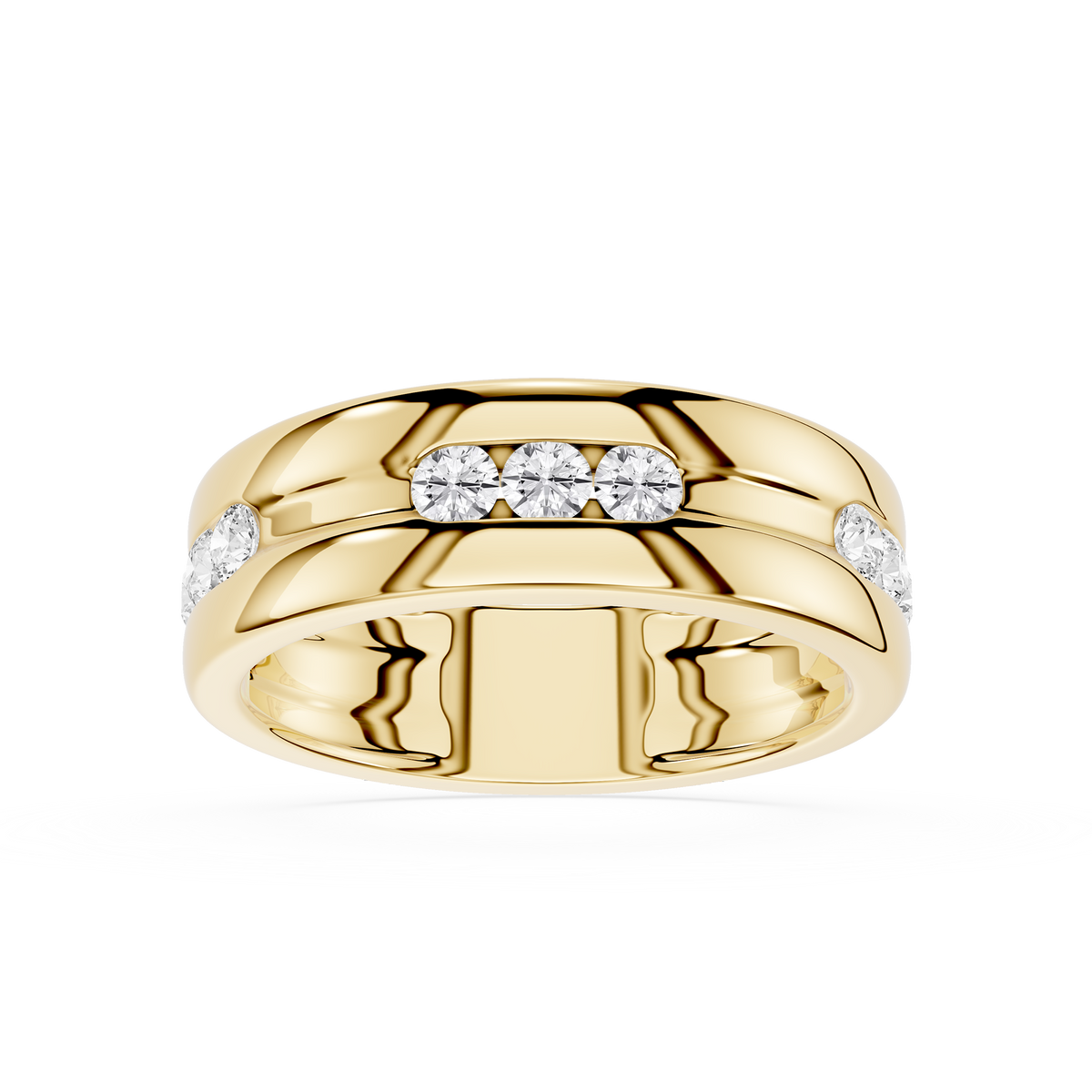
A flush (or gypsy) setting sinks the diamond directly into the band so its surface sits level with the metal, whether white gold, platinum, or yellow or rose gold. It's the technique with the least exposure and the smoothest surface of any style discussed here, but it has a noticeably lower profile and less light reaches the stone.
Match the Different Ring Setting to Your Lifestyle
The "best" setting depends on what your hands actually do all day.
-
If you work with your hands frequently.
When cooking, lifting, typing at speed, working in a trade, or handling tools, then look toward lower-profile designs with fewer protruding elements: bezel, channel, flush, or a low-set solitaire with well-secured prongs. Anything with delicate pavé prongs sitting proud of the band is more likely to snag on gloves, fabric, or equipment over time.
-
If you exercise or play sports regularly.
Ring security matters, but so does honesty about limits. No setting — bezel included — makes a ring impact-proof. Removing your ring for weightlifting, contact sports, swimming, or anything involving repeated hard surfaces is generally the safer habit, regardless of the setting. When you do wear it actively, a lower-profile, enclosed setting reduces (without eliminating) day-to-day snag risk.
-
If you want maximum sparkle.
Prioritize open designs that expose more of the diamond to light: a four-prong solitaire, a halo, or pavé accents. These let more light in and out of the stone, but you trade some protection for brilliance.
-
If you prefer low-maintenance jewelry.
Fewer small stones and fewer tight crevices mean less to clean and less that can loosen. A bezel- or channel-set solitaire is simpler to maintain than a pavé halo, simply because it has less surface area and fewer individual settings to inspect.
-
If you want a timeless look.
A solitaire or three-stone design in a classic prong or bezel setting tends to age well stylistically, since it isn't tied to a particular design trend.
-
If you want a bold, statement appearance, consider a halo.
A halo, a three-stone with larger side stones, or a pavé band adds visual weight and surface sparkle. Pick the design that best fits your preferences.
None of these are rigid rules. Many people mix priorities — a low-profile bezel with a halo for extra sparkle, for instance — and a good jeweler can usually adapt a setting technique to fit more than one goal.
Comparing the Main Ring Settings: From Solitaire to Flush Bands
|
Setting |
Visual Style |
Stone Protection |
Maintenance |
Lifestyle Fit |
|
Solitaire (4-prong) |
Classic, maximum light |
Moderate |
Low |
Everyday wear, timeless style |
|
Solitaire (6-prong) |
Classic, slightly less exposed |
Higher than 4-prong |
Low |
Larger stones, active hands |
|
Halo |
Maximum sparkle spread |
Moderate |
Higher (more stones to check) |
Statement looks, special occasions |
|
Three-stone |
Balanced, symbolic |
Moderate |
Moderate |
Symmetry lovers, moderate activity |
|
Pavé |
Brilliant along the band |
Lower (small prongs) |
Higher |
Sparkle-focused, gentler use |
|
Channel |
Smooth, continuous |
Higher |
Lower |
Frequent hand use, daily wear |
|
Bezel |
Sleek, modern |
Higher |
Low |
Active lifestyles, low-maintenance preference |
|
Tension |
Modern, "floating" stone |
Depends on design |
Moderate–higher |
Distinct style, less frequent resizing needs |
|
Flush |
Minimal, low profile |
Highest |
Lowest |
Very active or hands-on daily routines |
The right ring setting selection depends on your preferences like occasion, budget, and quality.
The Trade-Offs Worth Understanding
A well-informed choice usually comes down to accepting one trade-off in exchange for another:
-
Sparkle vs. protection: Open settings let in more light but expose more of the stone; enclosed settings protect the stone but soften some brilliance. You can find this in the GIA's guide to diamond ring protection.
-
Minimalism vs. visual impact: A bare solitaire reads as understated; a halo or pavé band reads as more elaborate.
-
Low profile vs. presence: Flush and bezel settings sit close to the hand; cathedral and halo settings sit higher and more visibly.
-
Easy cleaning vs. intricate detail: Fewer stones and simpler geometry are easier to keep clean; pavé and multi-stone designs need more frequent attention.
-
Classic vs. statement styling: Traditional prong solitaires tend to be timeless; tension and sculptural bezel designs feel more contemporary.
No version of this avoids trade-offs entirely. The goal is picking the combination that matches how you'll actually wear the ring, not just how it photographs.
Choosing a Setting for a Lab-Grown Diamond
If you want a 1-carat engagement ring with a prong or bezel setting, you can find it with lab-grown diamonds. It's not limited to round brilliant cut or oval shape. You can also choose a 3-carat emerald ring in pavé, an elongated radiant-cut diamond channel band, a square cushion tension setting, a princess flush set, or an Asscher ring.
The diamond's shape, carat weight, and your daily habits should guide the decision — the same factors that matter for any diamond. If you're comparing options, lab-grown diamond engagement rings span all the setting styles covered in this guide, so you can evaluate shape and setting together rather than as separate decisions.
Making the Final Decision
Start with how you live day to day, not with which setting photographs best. Narrow your options to two or three styles that fit your hands and habits, then let appearance and budget decide between them. A setting that matches your lifestyle will still look right in ten years; one chosen purely on trend can start to feel impractical much sooner.
The right diamond ring setting is ultimately the one that balances how the ring looks, how it feels on the hand, how much upkeep you're willing to do, and how it holds up to your specific routine. If you're ready to see how these settings translate into real designs, the lab-grown diamond engagement ring collection is a practical place to compare shapes, settings, and price points side by side.
FAQs
-
What is the best setting for an engagement ring?
Bezel and channel settings tend to suit active, hands-on routines, while prong-based solitaires and halos prioritize brilliance and classic appeal.
-
Which diamond setting is the most secure?
Bezel and flush settings generally offer the most protection because they enclose more of the stone's edge and leave fewer protruding points. Six-prong solitaires are also considered more secure than four-prong versions.
-
What setting is best for everyday wear?
Low-profile, enclosed settings — bezel, channel, or flush — hold up best to daily hand use because they have fewer elements that can snag or loosen. A well-secured six-prong solitaire is also a solid everyday option.
-
What's the difference between solitaire and halo settings?
A solitaire features a single diamond with no accent stones, emphasizing the center stone alone. A halo surrounds the center diamond with smaller accent stones, adding sparkle and making the center stone appear larger.
-
Is a bezel setting more protective than a prong setting?
Generally, yes. A bezel encloses the diamond's girdle in a metal rim, reducing exposure to knocks compared with prongs, which hold the stone with open, individual contact points. The trade-off is that bezels let in slightly less light, which can soften brilliance.
-
Which setting is best for an active lifestyle?
Bezel, channel, and flush settings are generally more forgiving for active routines because they minimize snag points and exposed edges. That said, no setting is impact-proof, so consider removing a ring for high-impact activity regardless of setting.
-
Are lab-grown diamonds suitable for all ring settings?
Yes. Lab-grown diamonds have the same hardness and structure as mined diamonds, so they work with every setting technique — prong, bezel, pavé, channel, tension, and flush — without any special adjustments.

